Η εκπαιδευτική πολιτική ως παράγοντας διαμόρφωσης των σχέσεων και των δράσεων του σχολείου, της οικογένειας και της κοινότητας: Προκλήσεις.
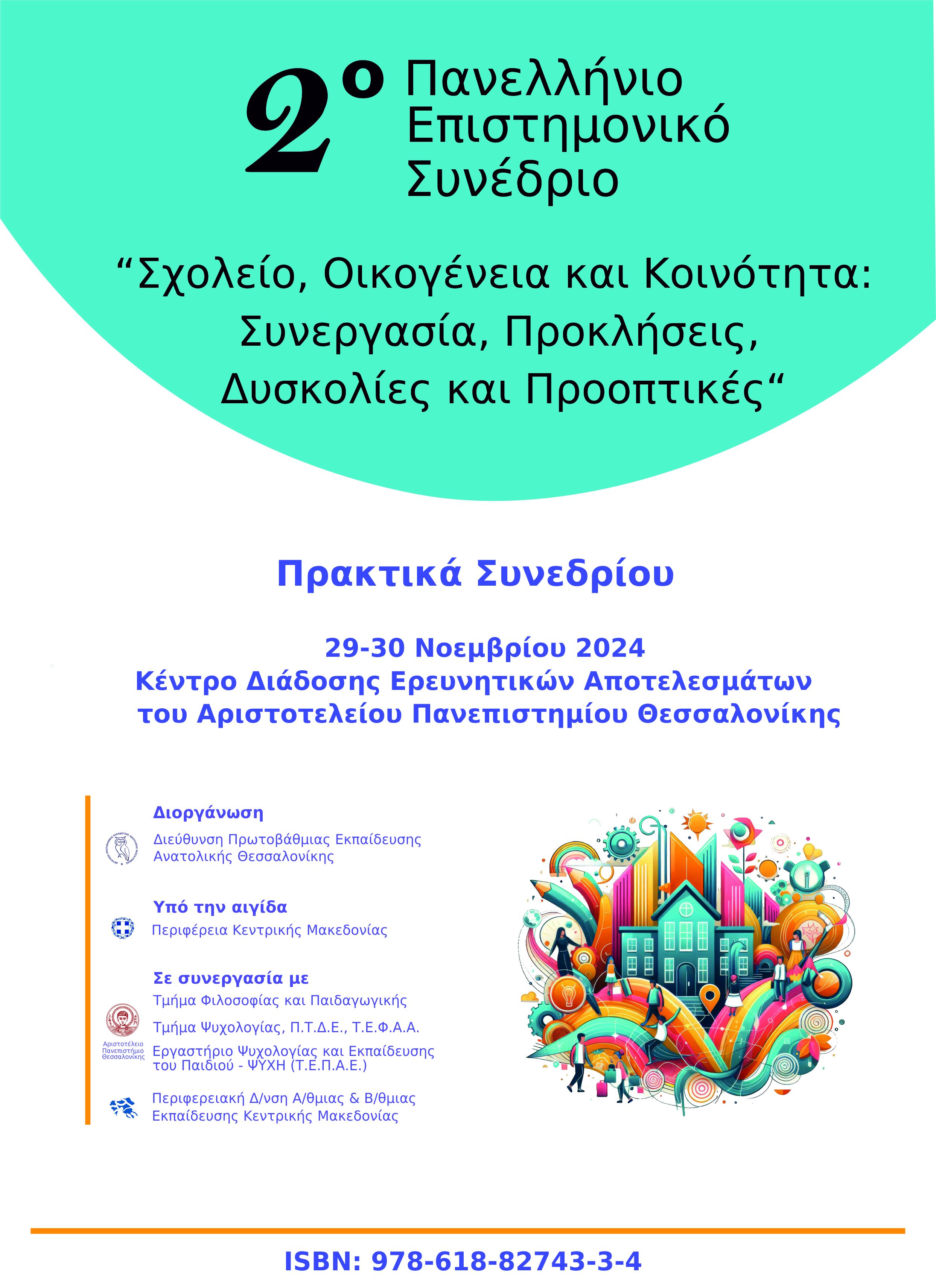

Published: Mar 12, 2026
Ευάγγελος Κελεσίδης
Abstract

Η παρούσα εργασία εξετάζει τον ρόλο της εκπαιδευτικής πολιτικής στη διαμόρφωση των σχέσεων και των δράσεων μεταξύ σχολείου, οικογένειας και κοινότητας στο ελληνικό εκπαιδευτικό σύστημα. Βασιζόμενη στο θεωρητικό μοντέλο των επικαλυπτόμενων σφαιρών επιρροής της Epstein, τη θεωρία της δομής και δράσης του Giddens και το βιο-οικολογικό μοντέλο του Bronfenbrenner, η έρευνα αναλύει τη διαλεκτική σχέση μεταξύ του μακροεπιπέδου (θεσμικό πλαίσιο) και του μικροεπιπέδου (καθημερινές πρακτικές). Μέσα από εμπειρική διερεύνηση 147 σχολικών μονάδων της Διεύθυνσης Πρωτοβάθμιας Εκπαίδευσης Ανατολικής Θεσσαλονίκης και καταγραφή δράσεων φορέων (Εκκλησία, Δήμοι, Κέντρα Πρόληψης), αναδεικνύονται τόσο οι δυνατότητες όσο και οι προκλήσεις της συνεργασίας. Τα ευρήματα καταδεικνύουν σημαντική δραστηριοποίηση των σχολείων (87% οργανώνουν δράσεις κοινού ενδιαφέροντος, 72% μεμονωμένες ομιλίες ειδικών), αλλά και περιορισμένη συστηματική εμπλοκή (το 46% διοργανώνουν σχολές γονέων). Η συμμετοχή των γονέων παρουσιάζει σημαντική διακύμανση, με κρίσιμα εμπόδια την πολυνομία, τις διαφορές αντιλήψεων και την επίδραση των μέσων κοινωνικής δικτύωσης. Η εργασία καταλήγει σε συγκεκριμένες πολιτικές προτάσεις για την ενίσχυση της συνεργασίας και την αναβάθμιση του εκπαιδευτικού συστήματος.

Article Details
  • Section
  • ΚΕΝΤΡΙΚΕΣ ΟΜΙΛΙΕΣ
References
Archer, M. S. (1995). Realist social theory: The morphogenetic approach. Cambridge University Press.
Boonk, L., Gijselaers, H. J., Ritzen, H., & Brand-Gruwel, S. (2018). A review of the relationship between parental involvement indicators and academic achievement. Educational Research Review, 24, 10-30.
Bronfenbrenner, U. (1979). The ecology of human development: Experiments by nature and design. Harvard University Press.
Bronfenbrenner, U. (1994). Ecological models of human development. In T. Husen & T. N. Postlethwaite (Eds.), International encyclopedia of education (2nd ed., Vol. 3, pp. 1643-1647). Pergamon Press.
Bronfenbrenner, U., & Morris, P. A. (2006). The bioecological model of human development. In R. M. Lerner & W. Damon (Eds.), Handbook of child psychology: Theoretical models of human development (6th ed., Vol. 1, pp. 793-828). Wiley.
Christenson, S. L., & Reschly, A. L. (2010). Handbook of school-family partnerships. Routledge.
Dworkin, J., Connell, J., & Doty, J. (2013). A literature review of parents' online behavior. Cyberpsychology: Journal of Psychosocial Research on Cyberspace, 7(2), Article 2.
Epstein, J. L. (1995). School/family/community partnerships: Caring for the children we share. Phi Delta Kappan, 76(9), 701-712.
Epstein, J. L. (2011). School, family, and community partnerships: Preparing educators and improving schools (2nd ed.). Westview Press.
Epstein, J. L. (2018). School, family, and community partnerships in teachers' professional work. Journal of Education for Teaching, 44(3), 397-406.
Epstein, J. L., & Sanders, M. G. (2006). Prospects for change: Preparing educators for school, family, and community partnerships. Peabody Journal of Education, 81(2), 81-120.
Epstein, J. L., & Sheldon, S. B. (2016). Necessary but not sufficient: The role of policy for advancing programs of school, family, and community partnerships. RSF: The Russell Sage Foundation Journal of the Social Sciences, 2(5), 202-219.
Giddens, A. (1984). The constitution of society: Outline of the theory of structuration. University of California Press.
Goodall, J., & Montgomery, C. (2014). Parental involvement to parental engagement: A continuum. Educational Review, 66(4), 399-410.
Harris, A., & Goodall, J. (2008). Do parents know they matter? Engaging all parents in learning. Educational Research, 50(3), 277-289.
Henderson, A. T., & Mapp, K. L. (2002). A new wave of evidence: The impact of school, family, and community connections on student achievement. National Center for Family and Community Connections with Schools.
Hoover-Dempsey, K. V., & Sandler, H. M. (1997). Why do parents become involved in their children's education? Review of Educational Research, 67(1), 3-42.
Jeynes, W. H. (2018). A practical model for school leaders to encourage parental involvement and parental engagement. School Leadership & Management, 38(2), 147-163.
Kyriakides, L., Creemers, B., Papastylianou, D., & Papadatou-Pastou, M. (2013). Improving the school learning environment to reduce bullying: An experimental study. Scandinavian Journal of Educational Research, 58(4), 453-478.
Lareau, A. (2011). Unequal childhoods: Class, race, and family life (2nd ed.). UniversityofCaliforniaPress.
Μπόνια, Α. (2011). Η στάση των εκπαιδευτικών απέναντι στη γονεϊκή εμπλοκή στο δημοτικό σχολείο (Διδακτορική διατριβή). ΠανεπιστήμιοΙωαννίνων.
Olmstead, C. (2013). Using technology to increase parent involvement in schools. TechTrends, 57(6), 28-37.
Olweus, D. (1993). Bullying at school: What we know and what we can do. Blackwell.
Priestley, M., Biesta, G., & Robinson, S. (2015). Teacher agency: An ecological approach. Bloomsbury Academic.
Sahlberg, P. (2015). Finnish lessons 2.0: What can the world learn from educational change in Finland? Teachers College Press.
Sanders, M. G. (2006). Building school-community partnerships: Collaboration for student success. Corwin Press.
Segrin, C., Woszidlo, A., Givertz, M., Bauer, A., & Murphy, M. T. (2012). The association between overparenting, parent-child communication, and entitlement and adaptive traits in adult children. Family Relations, 61(2), 237-252.
Sheldon, S. B., & Epstein, J. L. (2005). Involvement counts: Family and community partnerships and mathematics achievement. TheJournalofEducationalResearch, 98(4), 196-207.
Symeou, L. (2003). Σχέσεις σχολείου-οικογένειας: Έννοιες, μορφές και εκπαιδευτικές συνεπαγωγές. Παιδαγωγική Επιθεώρηση, 36, 101-113.
Thompson, B. C., Mazer, J. P., &Grady, E. F. (2015). The changing nature of parent-teacher communication: Mode selection in the smartphone era. Communication Education, 64(2), 187-207.
Wilder, S. (2014). Effects of parental involvement on academic achievement: A meta-synthesis. Educational Review, 66(3), 377-397.
Νομοθεσία
Ν. 1566/1985. Δομή και λειτουργία της πρωτοβάθμιας και δευτεροβάθμιας εκπαίδευσης και άλλες διατάξεις. ΦΕΚ Α' 167.
Φ.353.1/324/105657/Δ1/2002. Καθορισμός των ειδικότερων καθηκόντων και αρμοδιοτήτων των προϊσταμένων των περιφερειακών υπηρεσιών πρωτοβάθμιας και δευτεροβάθμιας εκπαίδευσης, των διευθυντών και υποδιευθυντών των σχολικών μονάδων και ΣΕΚ και των συλλόγων των διδασκόντων.ΦΕΚ Β' 1340.
Ν. 3699/2008. Ειδική Αγωγή και Εκπαίδευση ατόμων με αναπηρία ή με ειδικές εκπαιδευτικές ανάγκες. ΦΕΚ Α' 199.
Ν. 4692/2020. Αναβάθμιση του Σχολείου και άλλες διατάξεις. ΦΕΚ Α' 111.
Ν. 4823/2021. Αναβάθμιση του Σχολείου, ενδυνάμωση των εκπαιδευτικών και άλλες διατάξεις. ΦΕΚ Α' 136.
Ν. 5029/2023. Σπάμε τη σιωπή - Πρόληψη και αντιμετώπιση της ενδοσχολικής βίας και άλλες διατάξεις. ΦΕΚ Α' 50.